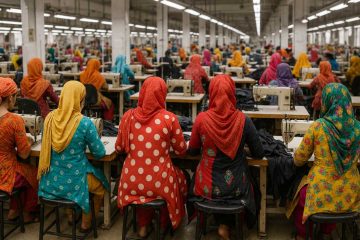
The global fashion industry has faced many challenges in recent years. Pandemic disruptions, shipping delays, and new trade rules created uncertainty for both buyers and exporters. Now in 2025, Southeast Asia is firmly back as one of the most important garment manufacturing and exporting regions in the world.
From Bangladesh to Vietnam and Cambodia, the region is buzzing with opportunities, modern compliance standards, and evolving logistics practices. If you are sourcing garments, this is what you need to know.
Growing Export Markets in Southeast Asia
Bangladesh continues to be a powerhouse. As the world’s second-largest apparel exporter, it shipped around 38.5 billion dollars worth of garments in 2024. Early 2025 shows strong growth in exports to the United States, European Union, and Persian Gulf markets. Bangladesh’s scale and cost competitiveness make it a top choice for buyers worldwide.
Vietnam is another key player. In the first seven months of 2025, textile and garment exports reached 26.3 billion dollars. The country is expected to hit between 46 and 48 billion dollars by the end of the year. Cambodia is also performing well with significant growth in garments, footwear, and travel goods.
What does this mean for buyers? Factories are busy, order books are filling quickly, and lead times need careful planning. Southeast Asia is not just recovering it is growing and evolving.
Navigating Logistics
Shipping and logistics remain a critical part of garment exporting. Ocean freight costs have stabilized compared with 2024 but are still unpredictable. Spot rates from Asia to Europe are around 3,400 to 3,800 dollars per container. Blank sailings and capacity management can still affect delivery schedules.
For exporters, planning is essential. Buyers should expect occasional delays and factor in buffer time for production and shipping. Booking vessel space in advance is no longer optional it is standard practice.
Compliance Matters More Than Price
In 2025 buyers are looking for more than just competitive pricing. Compliance has become a key factor in choosing suppliers.
Rules of Origin are essential for duty-free access under agreements like EVFTA and CPTPP. Missing documentation can lead to higher tariffs and delayed shipments.
Labor standards, especially under the U.S. Uyghur Forced Labor Prevention Act, require exporters to maintain clear supply chain documentation.
Sustainability is no longer just a marketing claim. Even though the EU paused its Green Claims directive, transparency in materials, chemical management, and labor practices is crucial. Buyers and consumers are paying close attention.
Country Highlights
Bangladesh offers scale, cost efficiency, and growing exports to the United States, European Union, and Persian Gulf markets. Tariff risks and occasional customs delays are challenges, but the market remains highly competitive.
Vietnam is strong in manufacturing outerwear, knits, and woven garments. FTA coverage is broad, but strict origin rules must be followed to benefit from duty reductions.
Cambodia has rising exports and expanding categories, but buyers should watch U.S. trade policies closely.
Indonesia and Thailand are ideal for mid to premium quality apparel and technical sportswear. Costs are higher, but expertise in specific products makes them valuable partners.
Myanmar still carries risk due to political instability and compliance concerns, and many buyers approach cautiously.
What Buyers Are Looking For
Today buyers want predictability, transparency, and sustainability.
Predictable lead times mean reliable production and shipping schedules.
Transparent compliance requires complete documentation on origin, suppliers, and audits.
Genuine sustainability is about verified data on recycled materials, chemical management, and labor practices.
Multi-country sourcing spreads risk across Bangladesh, Vietnam, Cambodia, and Indonesia. This helps buyers maintain supply even if one market faces delays or policy changes.
Tips for Exporters
Exporters who want to stand out can focus on a few key practices.
Provide two landed cost scenarios one with FTA compliance and one without. This helps buyers see potential savings.
Share clear lead time matrices by product type and fabric source.
Offer audit-ready compliance packs with every order.
Book vessel space early especially for Europe-bound shipments to avoid delays.
Southeast Asia’s garment industry is entering a new chapter. Scale, reliability, and compliance define success. Exporters who ship on time, prove origin, and demonstrate sustainability will find strong opportunities in 2025.
For buyers, understanding which countries excel in specific product categories and the trade landscape is key to making informed sourcing decisions.
Southeast Asia is ready to meet the demands of the global apparel market and offers exciting opportunities for both exporters and buyers.